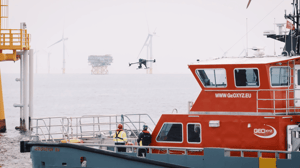

Offshore wind farms play an important role in the energy transition, but maintaining them is no easy task. Located far from shore and exposed to changing weather and sea conditions, offshore turbines are challenging and costly to inspect. Traditional methods often require specialist rope-access teams, making inspections time-consuming and potentially hazardous.
At C-Power's offshore wind farm in Belgium, GEOxyz is addressing these challenges with drone technology. Using the DJI Matrice 400 equipped with the Zenmuse H30 series payload, the team carries out annual inspections of 54 wind turbines, covering a total of 162 blades.
The Challenge: Inspecting Wind Turbines in a Demanding Offshore Environment
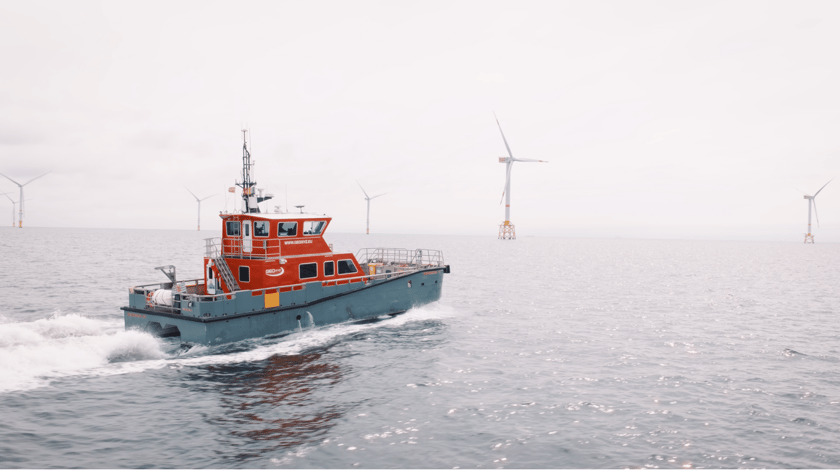
C-Power owns and operates Belgium's first offshore wind farm, located approximately 30 kilometres offshore. With 54 wind turbines, each featuring three blades, the inspection programme covers 162 individual blades every year.
Keeping these assets in good condition is essential for reliable wind farm operations. However, inspecting turbine blades offshore presents several practical challenges.
Traditional inspections often require technicians to access the blades using rope-access equipment. Working at height in an offshore environment introduces additional safety risks, while mobilising personnel and equipment at sea can make the process time-consuming and expensive.
Weather and sea conditions add another layer of complexity. Inspection teams need to work around offshore operating conditions, making efficient planning and execution particularly important.
In this case, drone inspections offer a more practical alternative. By capturing detailed imagery from the air, drones eliminate the need for external rope access to inspect the blades. They also significantly reduce inspection time and associated costs, while making the process safer for personnel.
Built for Offshore Operations: The Matrice 400
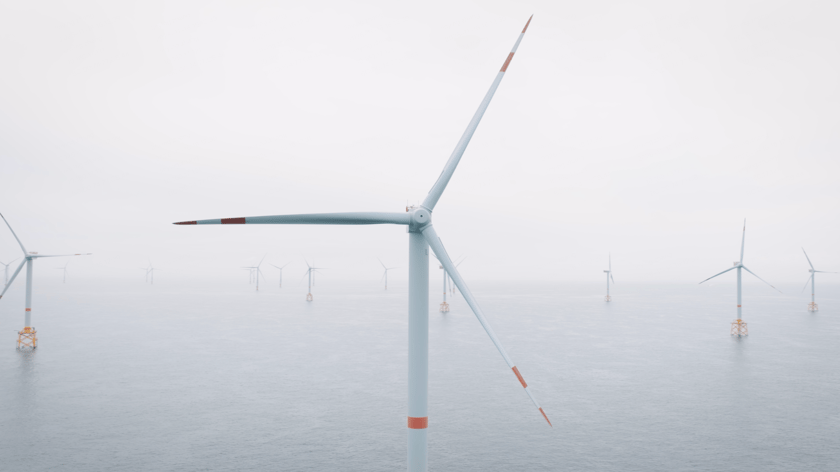
Offshore operations demand a reliable drone platform that can handle challenging marine conditions.
GEOxyz selected the DJI Matrice 400 for its endurance, multi-sensor capabilities and features designed to support offshore operations. One particularly valuable feature is its ability to take off and land automatically on a moving vessel deck1, an important advantage when operating at sea.
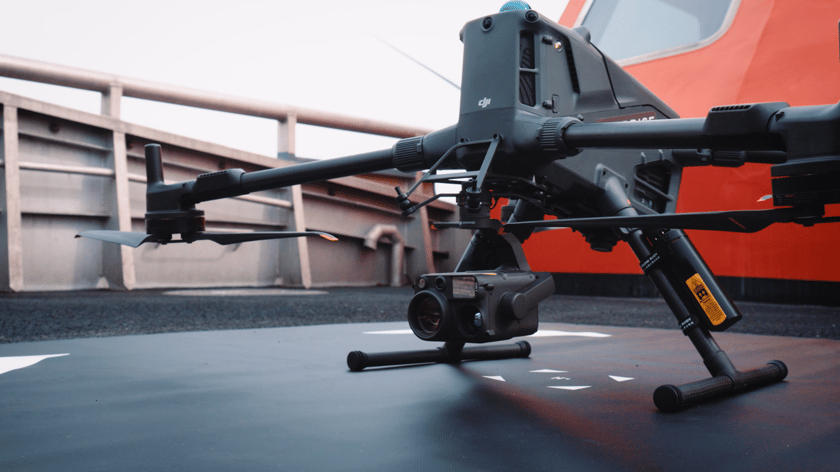
Paired with the Zenmuse H30 series payload, the M400 captures high-detail imagery of critical blade areas from a safe stand-off distance, helping inspection teams assess turbine conditions without putting personnel at height.
A Structured Workflow: From Flight Planning to Inspection Reports
The inspection process follows a structured workflow to ensure consistent data collection and efficient reporting.
1. Flight Planning
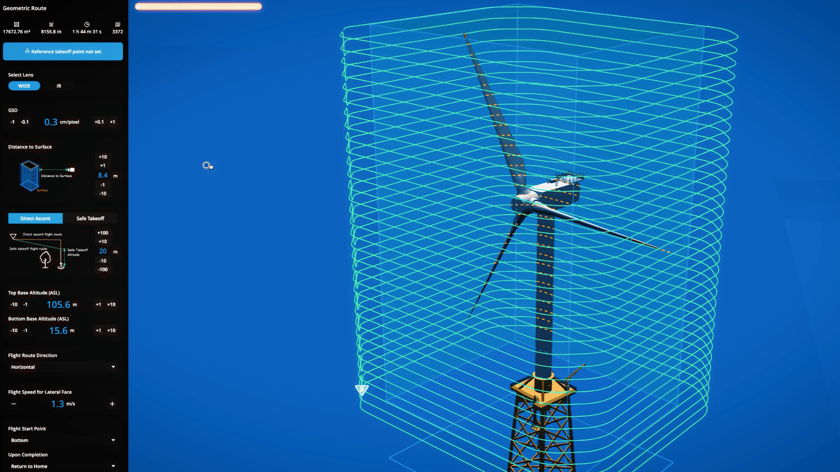
Every inspection starts with a predefined flight plan. Routes are mapped out in advance, ensuring that each turbine is inspected using the same methodology and reducing dependence on individual pilot decisions.
2. Automated Image Capture
Once offshore, the M400 follows the planned route automatically. Its reliable operation, combined with takeoff s and precise landing on moving vessels1, supports efficient inspection operations in the challenging offshore environment.
Equipped with the Zenmuse H30 series payload, the drone can inspect critical blade areas from a safe distance while maintaining the image detail needed for subsequent assessment.
3. Data Processing and Reporting
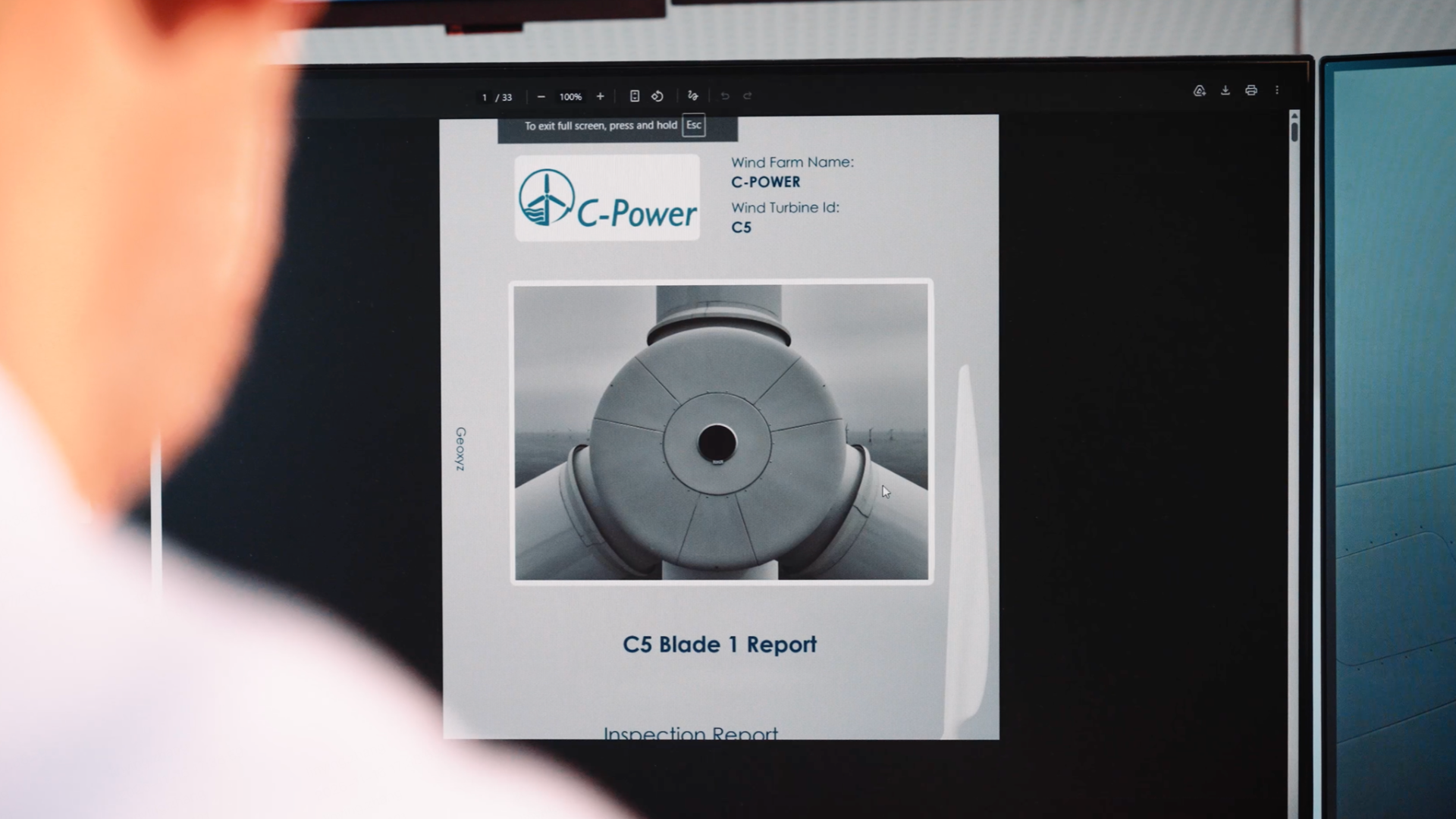
After the flight, images are uploaded to a dedicated platform, where part of the inspection report is generated automatically.
Nowadays, the AI can even help identify potential blade damage more systematically. This reduces reliance on individual inspectors' observations and supports more consistent inspection results.
4. Maintenance Planning
Based on the inspection report, additional checks or repairs are carried out where necessary. Traceable and reviewable findings give the operator a clearer overview of asset conditions and support maintenance planning.
The Results: Safer Operations and Smarter Inspections
The drone inspections bring clear operational benefits. By eliminating the need for external rope access, they reduce safety risks for personnel while making inspections faster and more cost-efficient. Meanwhile, structured image capture, AI-supported damage detection and automated reporting provide more consistent inspection results and valuable insights for maintenance planning.
And the potential goes beyond turbine blades. C-Power sees opportunities to extend drone inspections to other offshore assets, including substations, jackets, monopiles and even components inside turbines.
The collaboration between C-Power and GEOxyz shows how the DJI Matrice 400 and H30 Series, combined with offshore expertise and intelligent data processing, can support a more efficient approach to offshore asset management.
From safer inspections to smarter maintenance decisions, drone technology is helping shape the future of offshore wind farm operations.
Notes:
1. Takeoff and Landing on Vessels:
For takeoff:
-
It is recommended to use auto takeoff.
-
During auto takeoff, ensure the ship maintains a constant straight-line course at a speed not exceeding 10 knots relative to the ground, with environmental wind speeds below 5 m/s and calm sea conditions.
-
It is recommended that the ship remain stationary or move at a speed of less than 1 m/s relative to the ground during manual takeoff. This can be confirmed by observing the speed display of an aircraft with a strong satellite signal placed on the ship.
-
After enabling Boat Launch mode, the downward obstacle sensing is automatically disabled. Carefully observe the takeoff environment to avoid collision caused by ship movement, waves, or wind.
For landing:
-
For safe landing, ensure the ship maintains a constant straight-line course at a speed not exceeding 10 knots relative to the ground, with environmental wind speeds below 5 m/s and calm sea conditions.
-
Pressing the C2 button during auto landing will exit the auto landing mode.
-
During auto landing, if the landing marker recognition fails, the aircraft will automatically ascend to the auto takeoff altitude or to more than 20 m above the takeoff point, accompanied by voice and pop-up alerts. If the landing marker is recognized again during ascent, the auto landing will resume.