
It is 2:14 a.m. A motion sensor trips along the back fence of an industrial park. In the security operations center a few kilometers away, an alarm lights up on the console.
One question decides everything that happens next: what is actually out there? A stray animal? Wind moving a gate? Or someone already inside the yard? For most of the history of security and emergency response, there was only one way to find out. Send a person, and wait for them to arrive and look.
Drone as First Responder (DFR) changes that. And the version changing it fastest is the one where the drone no longer drives to the call at all. It already lives at the scene, in a dock. To see how, it helps to watch the same 2:14 a.m. alarm play out twice: once the traditional way, and once with that docked drone in the response chain.
The Traditional Timeline: Deciding Blind
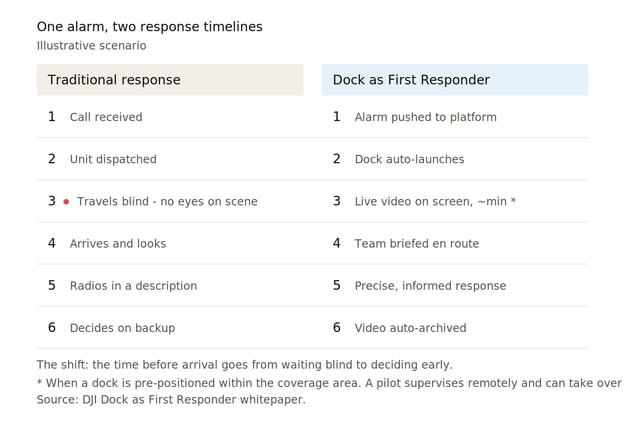
In the traditional model, response runs as a straight line, each step waiting on the one before it.
The alarm reaches the dispatch system, the computer-aided dispatch (CAD) platform that logs and assigns every call. An operator logs the incident: location, type, a first guess at how serious it is. The dispatcher finds the nearest available unit and assigns the call. A patrol vehicle starts driving. How long it takes depends on distance, traffic, and road access, none of which the dispatcher controls.
And during that drive, the command center sees nothing. From the moment the alarm fires until a unit physically arrives, no one running the response has any picture of the scene. They are waiting on a person to get there and describe it over the radio.
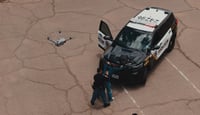
The officer arrives and looks around. This is the first moment anyone at the command level learns what is actually happening. They radio in a description. The dispatcher builds a mental image from that verbal report, with no video and no confirmation, just words from someone who arrived seconds ago and is assessing under pressure. Then, based on that report, the call on whether to send backup, specialists, or emergency services gets made, still without anyone at command having seen the scene.
In a spread-out environment, the gap between the alarm and the first real information about the scene can run several minutes. The whole time, the situation keeps changing, and command is blind to it. Every decision in that window is a decision made on a guess.
The DFR Timeline: Seeing First
Now rewind to 2:14 a.m. and run it again, this time with a dock on site.
Long before tonight, the groundwork was laid. The dock was placed to cover this area. Sensitive spots nearby were marked as no-fly zones the drone will never cross. Coverage areas and flight routes were mapped. A pilot was assigned to this dock, on call, watching over its missions. None of this happens during the incident. It is all done in advance, so that when an alarm fires, the response grid is already in place.
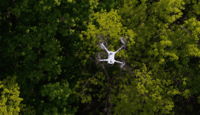
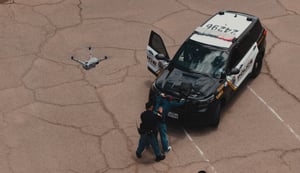
The alarm trips. This time the CAD system is wired into the drone platform, so the incident location passes straight to it, and the dock responds: the hatch opens, the drone lifts off on its own, and it flies toward the coordinates. No one drove anywhere. When the dock is pre-positioned within the coverage area, the drone is overhead within a few minutes, and live video is on the command center's wall.
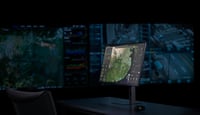
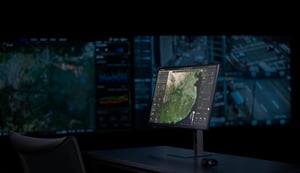
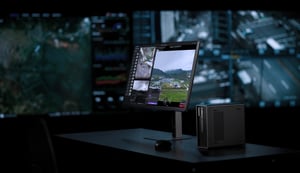
Now the command center can see the scene before a single ground unit has arrived. For an agency running a real-time crime center, the drone feed becomes one more live source on the same wall. The video feed and the drone's position both come up at once: operators watch what the drone sees, and track where it is on the map. That same picture, including the live feed, the drone's location, and the markers the team drops on points of interest, is available to the ground units too, on their terminals, while they are still en route. Everyone responding is working from the same aerial view before anyone reaches the fence.
With that view, the commander can actually classify the incident (how big, how serious, what the immediate risks are, what it will take to handle) before the first vehicle pulls up. And that assessment drives the decision: hold the units already assigned, redirect them, or escalate. If the yard is empty and it was a stray animal, nobody wastes a full response on it. If there are people inside and it is escalating, the right resources are moving with a real understanding of what they are walking into.
When it is over, the closing loop runs largely on its own. The mission is marked complete, the footage and flight records sync to the evidence system, and the full package is tied back to the incident record. The drone returns to the dock, recharges, and is ready for the next call. The archiving happens automatically; the team's job is to confirm the record is complete, not to chase down files by hand.
The Part That Matters: A Human Is Always in the Loop
Read that sequence quickly and you might picture a system running with no one home. That is not what a DFR response is, and the distinction matters to the people who operate these programs and to the regulators who oversee them.
Throughout the flight, a pilot is supervising. In a DFR response, the pilot does not fly the drone by hand for the routine mission, because the automated flight handles that. What the pilot does is watch: flight progress, battery status, system alerts, the aerial view. And they stand by to take manual control the moment the mission hits something the system cannot resolve on its own. The automation handles the routine; the person handles the judgment, and can step in at any time.
That division runs through the whole response. The system does what should be automated: launching on trigger, flying the route, streaming the feed, syncing the evidence. People do what needs a human: qualifying the alarm, assessing the scene, deciding who to send, and taking the controls if the situation calls for it. Automating the routine while keeping people on the judgment is not a caveat bolted onto DFR. That is how the model is built.
What Actually Changed
Put the two timelines side by side and the difference is not mainly that the drone is fast, though it is. What changes is when the command center stops guessing.
In the traditional model, the window between the alarm and the first real information is dead time. Minutes spent waiting, deciding blind, hoping the first description over the radio is accurate. In the DFR model, that same window is when the most important decisions get made well, because someone is finally looking at the scene.
The response chain stops being a straight line where every step waits on a vehicle to arrive. The drone gets there first, the command center sees first, and the ground teams move with a real picture instead of a guess. The time before arrival turns from waiting into deciding.
And the reason it scales is the dock: one operator can cover more than one site, and aerial confirmation becomes a routine resource rather than a special request. The drone that already lives at the scene, in a dock, ready to launch on the next alarm, is what turns this from a one-off capability into Dock as First Responder. The drone is the response. The dock is what makes it always ready.
New to the model? Start with our overview: Drone as First Responder (DFR): How Docks Are Changing the Model. You can also see how DJI Dock 3 and FlightHub 2 fit together for public-safety response.
Next in this series: once you have seen how a DFR response works, the natural question is what it costs. We break down the numbers in Drone as First Responder ROI: Patrol-Based vs. Docked Deployment.