
Most teams that decide to build a Drone as First Responder program open with the question of what to buy. It is the wrong place to start. What matters first is what to prove, and in what order.
A DFR program is not a one-time purchase that arrives, gets installed, and switches on at full scale. It is a path. You start by proving a single dock actually works at one site, then connect it into the systems your team already runs, then clear the security and approval requirements, then turn it into a round-the-clock service, and eventually link multiple sites into a network. Each stage has its own goal, its own checklist, and its own definition of done. Skipping ahead is where programs stall.
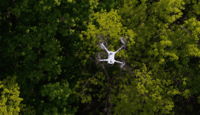
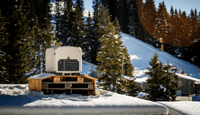
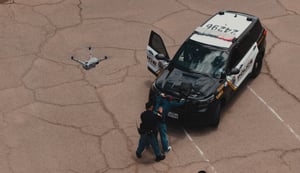
Early drone response meant a pilot who carried a drone to each call. The field is moving from drone as first responder to dock as first responder: the drone already lives at the scene and launches on its own. Getting there is a staged build, and this article walks through the five stages, what each one requires, and how to staff the operation once it runs.
If you have already worked through why DFR matters and what it costs, this is the practical next step: how to actually build one.
Set Expectations First: DFR Is a Path, Not a Purchase
Before the stages, one point shapes every decision that follows. The value of a DFR program compounds as it matures, and so does the investment. The first stage asks very little and proves the core idea. The middle stages carry the most friction, because that is where security review and approvals live. The later stages are where the work pays back, because a running service and a networked operation return far more than a single validated site.
That progression matters for planning. It means you do not need to solve every problem on day one. You need to solve the right problem for the stage you are in, and build a foundation the next stage can stand on. A team that treats stage one like a full production rollout spends money it does not need to spend yet. A team that rushes past the compliance stage to get to operations usually ends up redoing it.
The Five Stages of a DFR Program
The path runs from a single dock to a regional network. Each stage changes what you are operating and what the program is for.
Stage 1: Prove the capability. Put one or two docks on a single site and confirm the basics actually work. Does the drone launch reliably on a trigger? Does live video reach your screen? Does the dock handle its own launch, landing, and recharge? This is also where you see the real-world limits honestly: weather and airspace restrictions will keep a drone grounded some of the time, and it is better to learn how often that happens at your site now than to discover it later. This stage is deliberately small. Its only job is to validate that dock-based aerial response is real in your environment, before anyone commits to more. Get this wrong and nothing downstream matters; get it right and you have proof to build on.
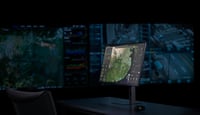
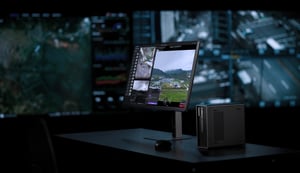
Stage 2: Integrate the systems. A dock that works in isolation is a demo, not a program. This stage connects the drone into the systems your team already uses to run a response: the dispatch workflow that assigns incidents, the video platform where operators watch feeds, and the map that shows where things are. The goal is that an alarm can move into your existing response process and the drone's video and location show up where your team already looks, rather than on a separate screen someone has to remember to check.
Stage 3: Clear security and compliance. This is the stage that carries the most friction, and there is no point pretending otherwise. Here the program has to satisfy the IT security review, the flight approvals, and the data-handling rules that apply where it operates. The requirements vary by country and region, and they vary by the kind of organization you are. This is not a stage to rush or to treat as a formality. It is usually the longest and most demanding part of the build, and the section below on approvals covers how to prepare for it without assuming any particular outcome.
Stage 4: Move to service operations. Once the system is integrated and approved, the program shifts from a project into a service. This is where a remote operations center comes in: a place where dispatchers and remote pilots run continuous coverage, so the program can operate around the clock rather than during a demo window. The business model changes here too, from delivering a project to running an ongoing service with the staffing and reliability that implies.
Stage 5: Connect the network. The final stage links multiple sites into a coordinated operation. One command center oversees docks across many locations, and the program becomes a regional capability rather than a single-site deployment. This is where the economics of the model pay off most, because coverage scales without staffing scaling at the same rate, but it only works once the earlier stages are solid at every site.
A note worth keeping in view across all five stages: the docked model adds a scalable layer for routine, repeatable, and time-critical response. It does not retire pilot-flown operations. SWAT overwatch, indoor work, fast-changing dynamic scenes, and any situation where a trained pilot is already on site still call for a pilot with a drone in hand. You are building an additional layer, not replacing your existing capability.
A Note on Approvals
Approvals are where expectations most often go wrong, so they are worth addressing directly.
Put plainly: the process and the requirements vary by country and region, and this article cannot tell you how hard approval will be where you operate or how long it will take. What it can tell you is what to prepare, because the categories of preparation are broadly consistent even when the specific rules are not. You will generally need to define the area you intend to fly, write the operating procedures for how missions run, assign the people responsible for safety and operations, prepare the emergency and contingency actions, and document how data is handled. That preparation is the same work whether your jurisdiction grants approval quickly or slowly.
The BVLOS question sits inside this. Flying a drone beyond the operator's direct line of sight is what makes centralized, one-pilot-covers-many operation possible, and whether and how that is permitted depends entirely on local regulation. Treat it as a requirement to prepare for and satisfy on local terms, not as something to assume. Build your plan around meeting the rules that apply to you, rather than around a hoped-for outcome.
The Stage-by-Stage Preparation Checklist
The same five areas of readiness run through every stage. What changes is how deep each one goes as the program matures. This table maps the five preparation areas across the stages, so you can see what each stage actually asks of you.
| Preparation area | Early stages (prove and integrate) | Middle stage (compliance) | Later stages (operate and scale) |
|---|---|---|---|
| Site and installation | Light site survey; one or two dock positions | Formal, fixed installation | Multiple sites; regional footprint |
| Power and network | Temporary power and mobile connectivity to prove it works | Dedicated power and network with backup | Production-grade, high-availability wide-area network |
| Flight approval | Line-of-sight or preliminary approval for validation | Formal approval on local terms, including BVLOS where applicable | Routine, repeatable approval framework across sites |
| System integration | Minimum viable connection: alarm, video, location | Full connection into dispatch, video, and evidence systems | Standardized, platform-level access across the network |
| Data and governance | Basic handling for a contained trial | Formal data-handling, permissions, and audit model for review | Multi-site governance and retention framework |
Source: DJI Dock as First Responder whitepaper, §1.6. Specific requirements vary by country and region.
Nothing here is one-and-done. Each area starts light in validation and deepens as the program moves toward production. Planning for that curve, rather than trying to build production-grade everything on day one, is what keeps a program moving.
How to Staff a DFR Program
A DFR program is an operational system, not just a technology deployment. The hardware and software handle the automated functions, but the people around them determine whether the program runs reliably at scale. A mature program generally involves six roles. They do not all have to be six separate people at first, but the responsibilities all need an owner.
Program manager. The operational core. This role owns drone readiness across the whole lifecycle, from configuring docks and coverage areas and no-fly zones before deployment, to verifying after each mission that the record is complete. They assign pilots to coverage zones and keep the whole operation ready before any alarm fires and accountable after any mission closes.
Dock pilot. The human in the automated loop, and the role most often misunderstood. In a DFR response, the dock pilot does not fly the drone by hand for the routine mission. The automated flight handles that. What the pilot does is supervise: watching flight progress, battery status, and system alerts, adjusting the camera when the command center asks, and standing by to take manual control the moment a mission hits something the automation cannot resolve on its own. This is the part regulators consistently focus on. The pilot's job is oversight and judgment, not routine stick time, and a person is always in the loop able to intervene.
Command center. The decision-making hub. This role watches the aerial feeds, tracks drone and ground-unit positions on the map, assesses the severity of an incident from the aerial view before ground units arrive, and decides what response to send. In a multi-agency situation, the command center coordinates using the shared aerial picture.
Dispatch. The connection between the alarm system and the drone response. This role receives incidents, judges which ones warrant a drone, and coordinates how ground units route to the scene using the drone's position. The quality of the incident information passed along here determines whether the right dock goes to the right place.
Ground response. The teams who act on what the drone finds. They receive the live video, position, and markers on their terminals while they are still en route, so they arrive briefed rather than blind, and they carry out the actual intervention the incident calls for.
Evidence and archiving. The role that closes the loop after an incident. The archiving itself is largely automated, so this role's real job is governance: confirming each evidence package is complete and correctly linked to the incident, maintaining the chain of custody, and managing retention and access in line with the rules that apply. The system moves the files; this role makes sure they hold up.
Across all six roles, automation handles the routine and people handle the judgment. That split is not window dressing. It is how the work is actually divided, and it is what a program is staffing for.
Where to Go From Here
Building a DFR program is a staged path, not a single decision. Prove one dock works, integrate it into the systems you already run, clear the security and approval requirements on local terms, turn it into a round-the-clock service, and connect multiple sites into a network. Each stage has a clear goal and a clear definition of done, and the point of following the order is that each stage builds the foundation the next one stands on.
The full five-stage model, the complete readiness matrix for every preparation area, and the detailed role definitions are laid out in the Dock as First Responder whitepaper. If you are far enough along to be planning a program, that is the reference to work from, and our team can help you map the stages to your specific sites and requirements.
New to the model? Start with our overview: Drone as First Responder (DFR): How Docks Are Changing the Model. Weighing the cost case? See Drone as First Responder ROI: Patrol-Based vs. Docked Deployment. You can also see how DJI Dock 3 and FlightHub 2 fit together.
Download the Dock as First Responder whitepaper → · Talk to our team about your sites →
Next in this series: once a program is running, the questions turn to data. See Data Security, Privacy, and Community Trust in DFR Programs.