


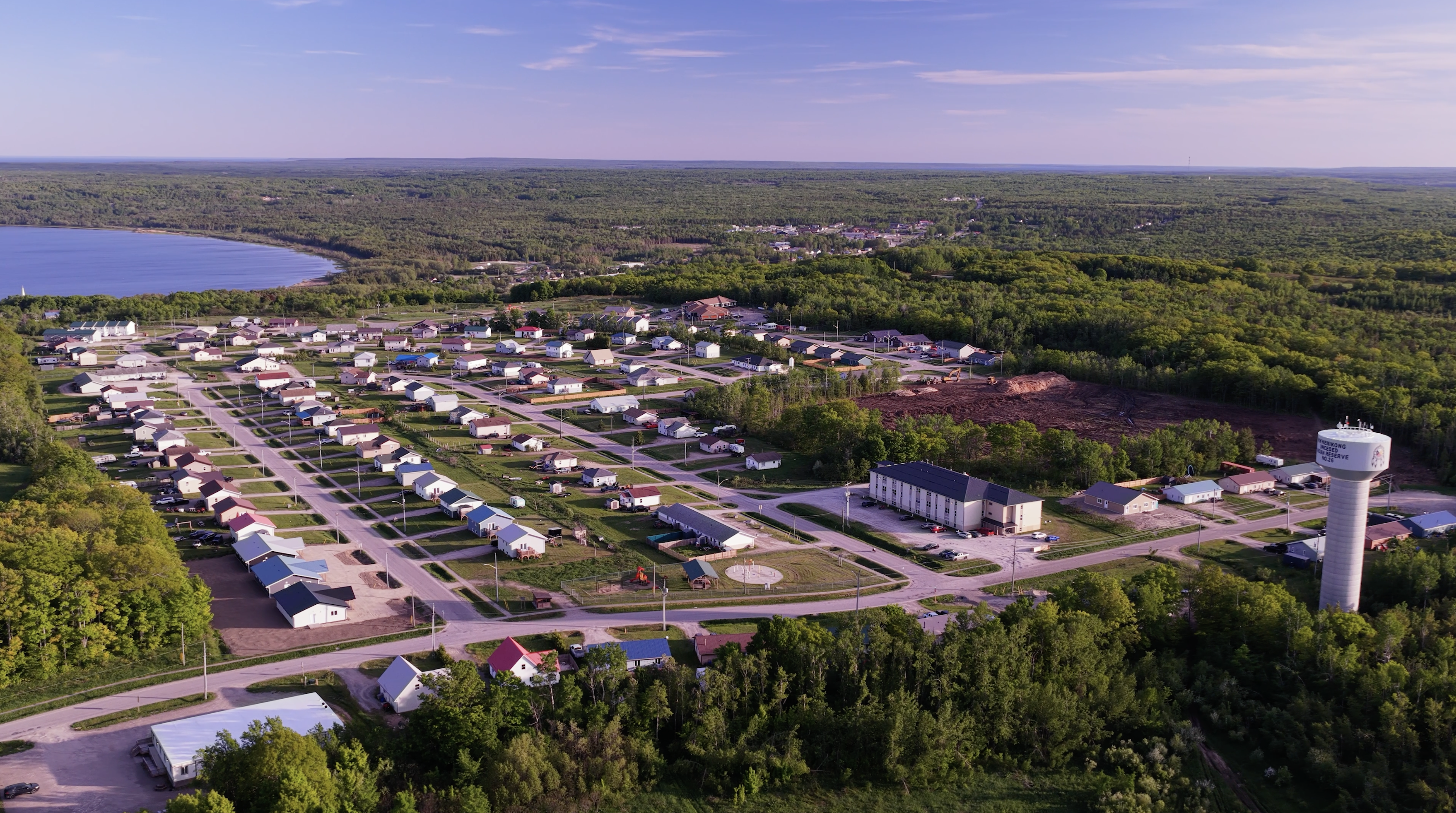
On the east side of Manitoulin Island — the largest freshwater island in the world — sits Wiikwemkoong Unceded Territory. Its name comes from the Anishinaabe word for the Bay of Beavers, the shoreline where the community's ancestors settled generations ago. Today it remains one of the only recognized unceded First Nation territories in Canada: land never surrendered by treaty, governed by its own laws.
It's also where one of the most striking examples of Indigenous-led public safety technology in the country is quietly taking shape — a drone program conceived, owned, and operated entirely by the community itself.
"To me," says Michael McCormick, the territory's Chief Technology Officer, "it's Indigenous innovation at work."
A question of priorities
The program didn't begin with technology. It began with a question.
Chief Tim Ominika Ogimma — Red Otter of the Wolf Clan — spent a decade as a council member before his election as Chief. Around that table, he watched the community grapple with the pressures facing many First Nations: mental health and addiction, substances of abuse, and organized crime moving in from outside. When staff first brought forward the idea of surveillance cameras, and later drones, the price tag drew hesitation from leadership. Nothing like it had been attempted in a First Nation setting before.
The Chief's response reframed the entire conversation. As he recalls telling the table: what's more important, individual lives or money?
That question changed the narrative. The community chose to fund the program internally and build it themselves — not because they were required to, but because protecting their members was, in the Chief's words, paramount.
Built by their own people
What makes Wiikwemkoong's program distinct isn't the hardware. It's the ownership.
"This program, through the technology that we have, has been created by our own people based on our needs," says Shelley Trudeau, CEO of the territory's operations, who spent 24 years in social services before stepping into the role. For her, the work was never only about safety — it was about building a community where children and youth feel secure enough to grow into the leaders of the future.
The community took a deliberate, transparent path to get there. What started as a pilot project is now part of everyday operations. Leadership provided regular written updates at the chief and council table, shared video updates, and — crucially — brought demonstrations directly to the community, including to students at the local high school. "Getting them involved and interested in a future career," Trudeau explains, was part of the point.
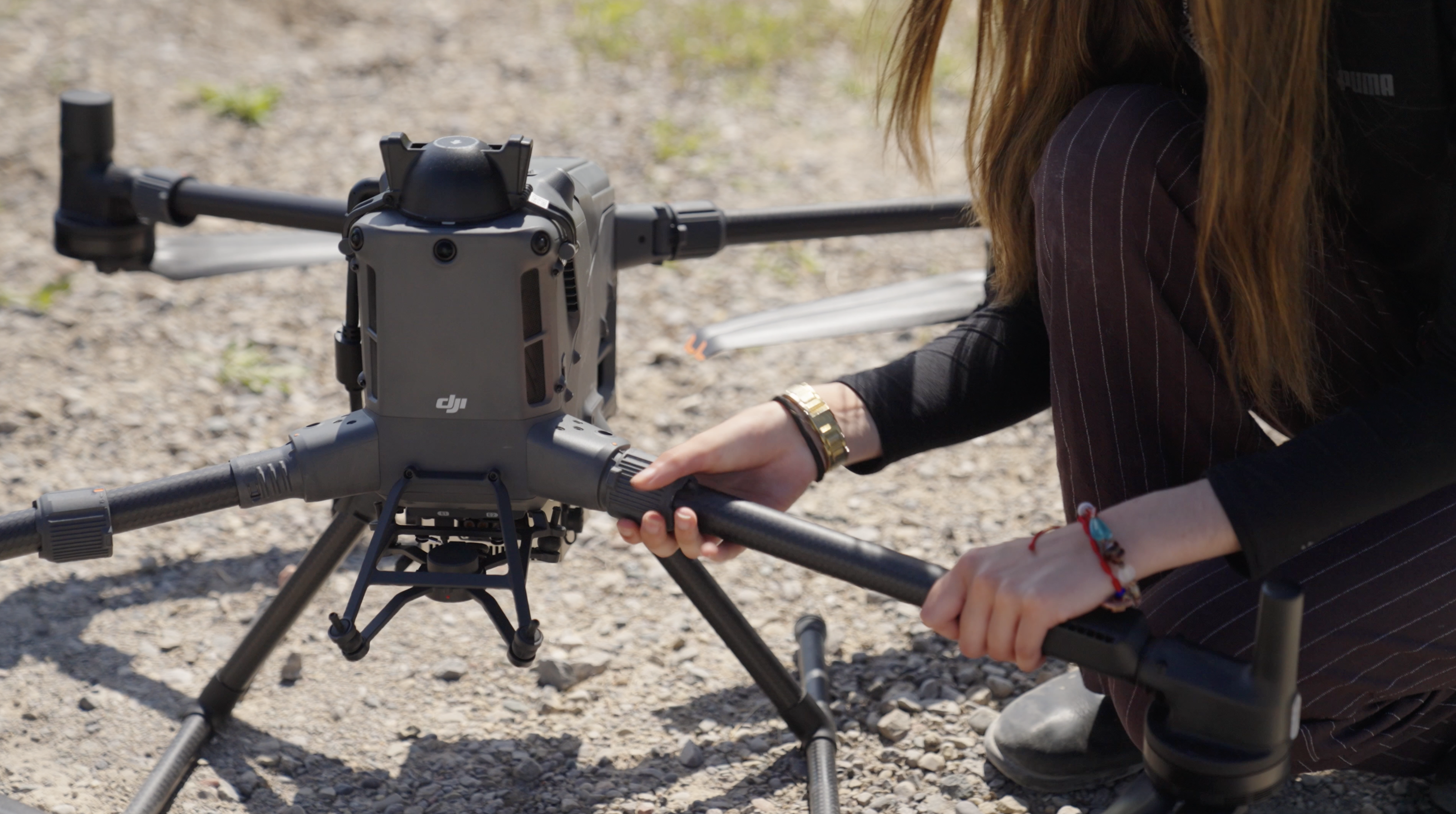
Just as important, the program employs Wiikwemkoong's own people. Community members are trained to operate the equipment and serve their own neighbours — the program growing, always, around community need.
From one small drone to a docked fleet
When McCormick arrived, the technology landscape was fragmented: a few cameras here, a couple of servers there. He began piecing it into something cohesive. The camera network grew from roughly a dozen to around 700. But cameras, the team realized, were passive — they recorded, but they couldn't move, couldn't see beyond a fixed line of sight.
"We needed to see more beyond the visual line of sight of the camera," McCormick says. "A lot of times there's a lot in play when there's a situation, and the drone gave us the ability to see how it's playing out."
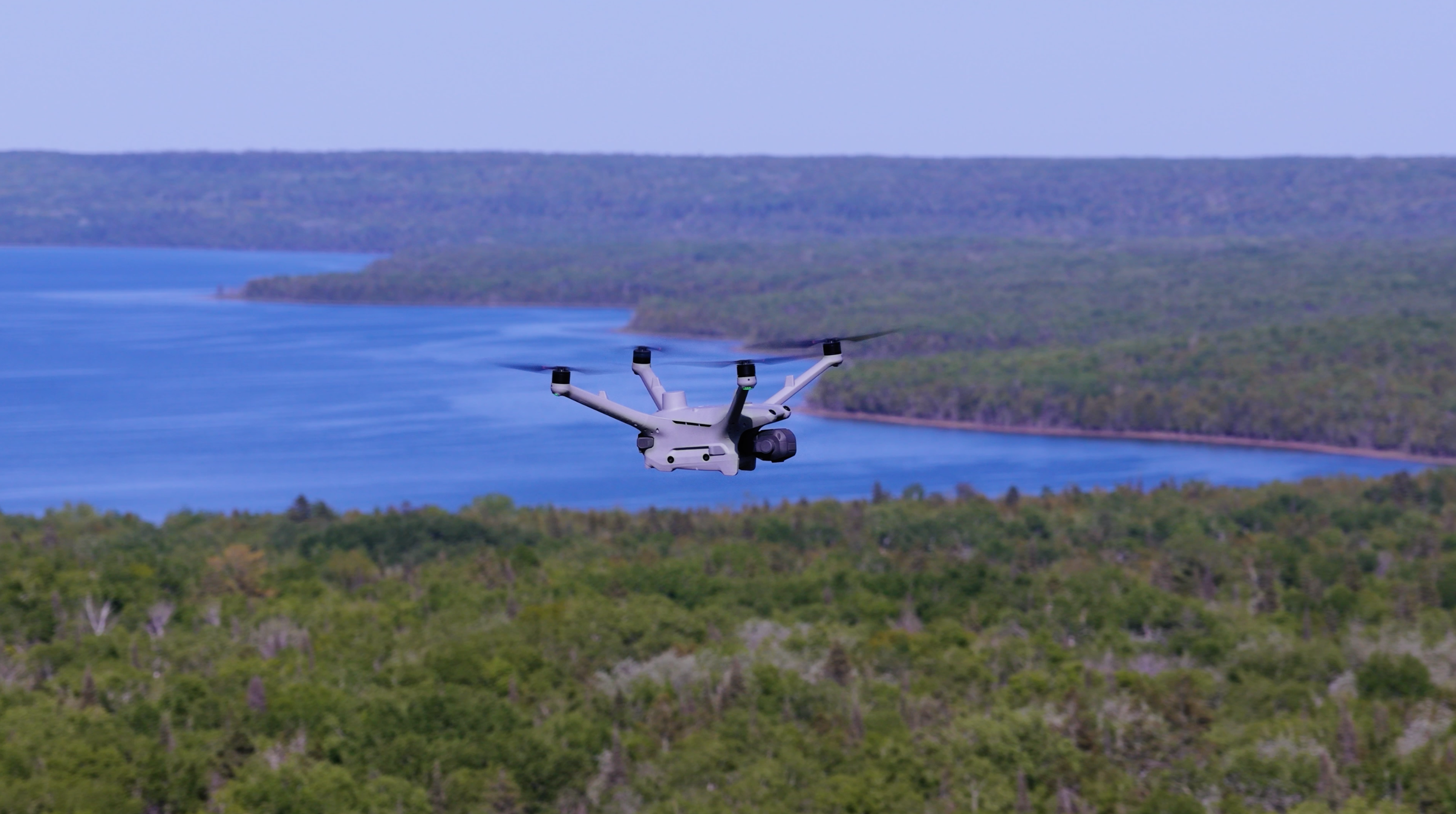
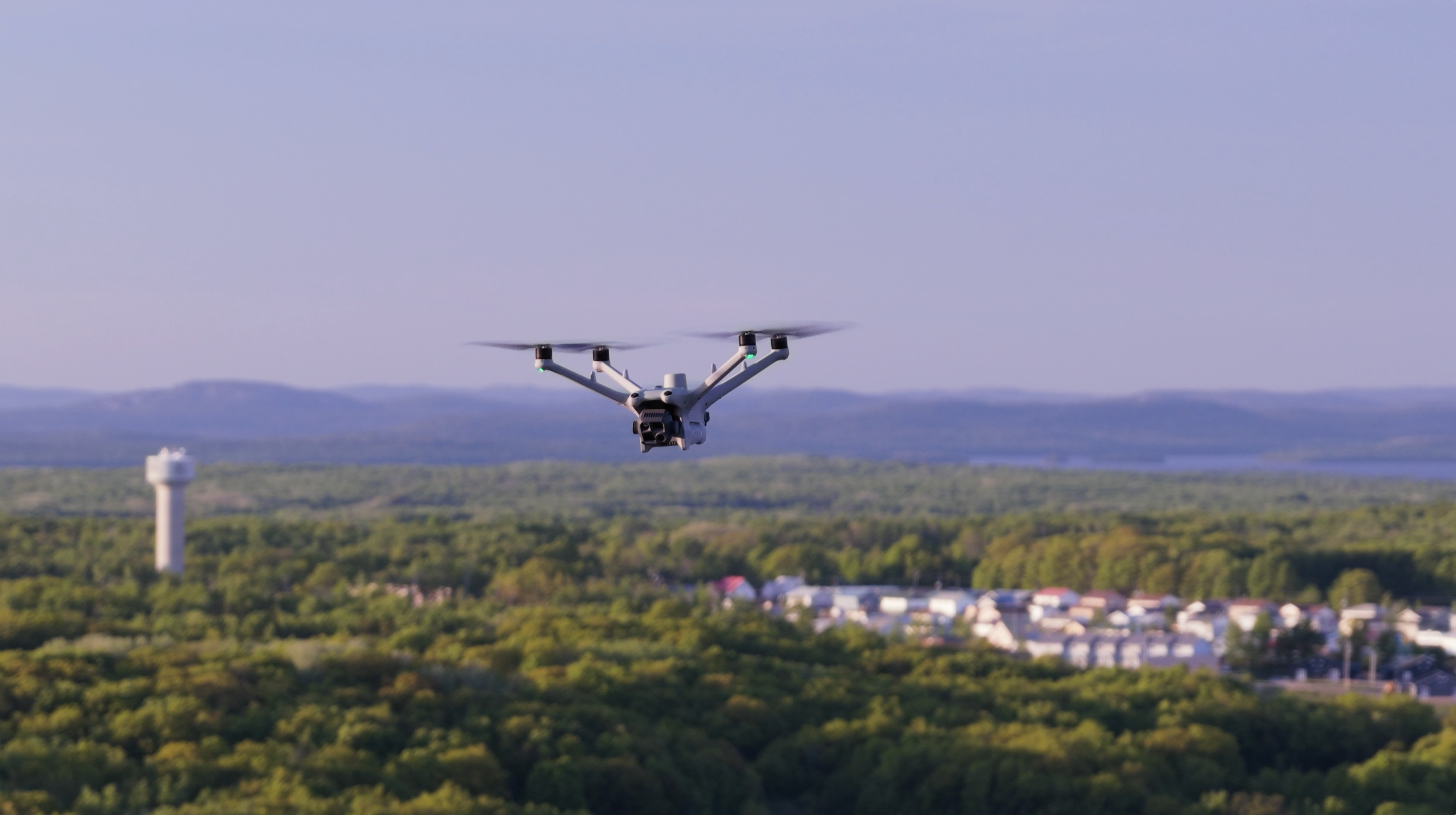
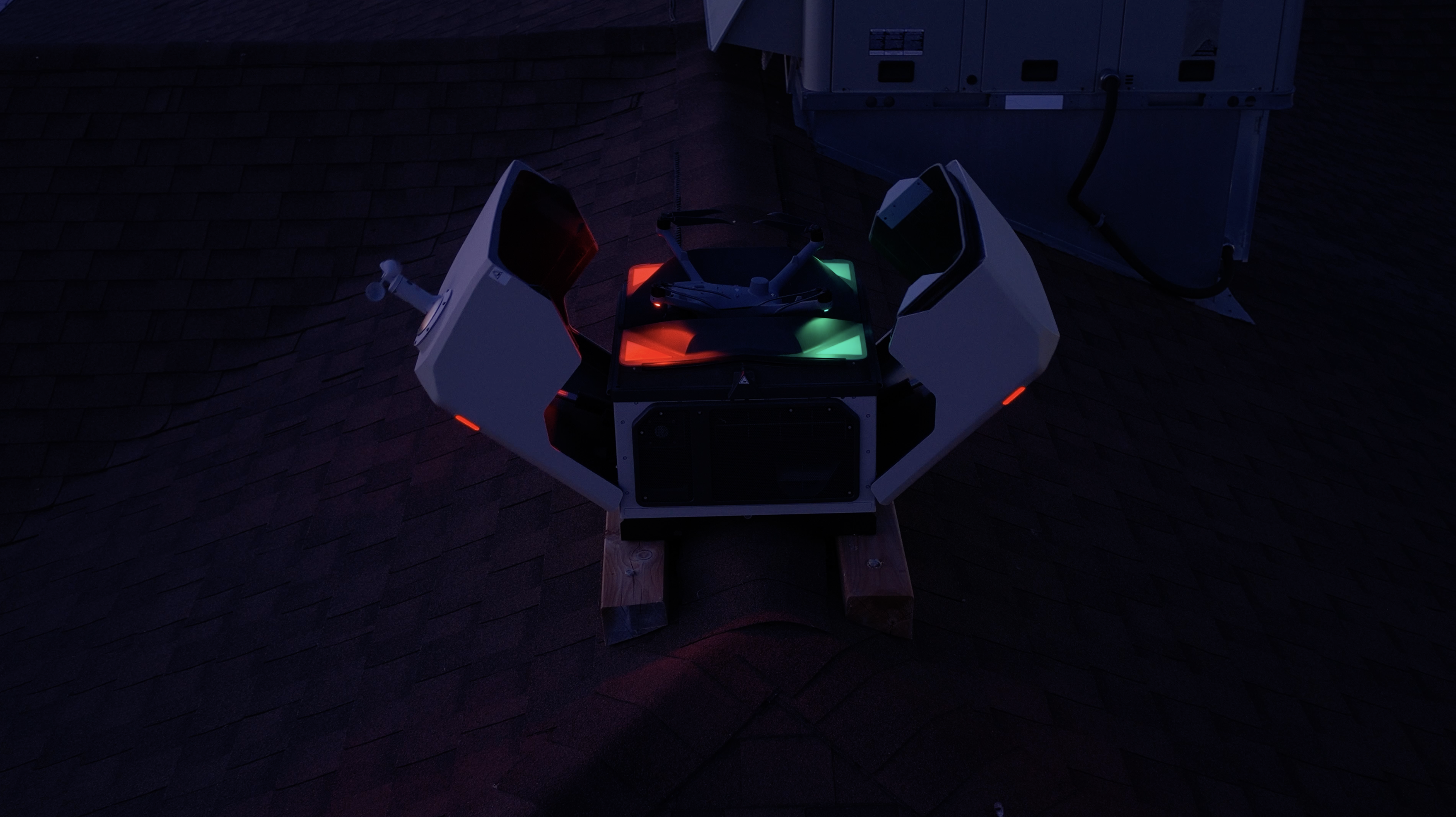
The progression was incremental: a single DJI mini, then enterprise drones with zoom and thermal capability, and finally docking stations positioned permanently across the territory. The docks solved a problem specific to the North. Sending a crew out to set up a drone manually could take 45 minutes to reach a location — and in a place where winter temperatures hit -28 or -29°C, staff standing in subzero conditions to launch aircraft simply wasn't viable.
With pre-positioned docks, response time collapses from three-quarters of an hour to a matter of seconds.
Dock as first responder
The territory is not easy ground to cover: 220 kilometres of shoreline and roughly 65,000 hectares of trees, hills, valleys, and water, with line-of-sight challenges everywhere.
"With Dock as first responder, our cameras, and — most importantly — our people, we're able to keep our community safe," McCormick says. That last phrase matters to him; he circled back to it repeatedly. The drone is a tool. The people are the point.
Increasingly, the docks respond on their own. A new auto-dispatch capability lets the system react to a trigger from the camera network and send a drone straight to the location — vital when, as McCormick puts it, "things can go from zero to 100 really quick." For surveillance operator Gavin Henry, a Wiikwemkoong band member born and raised in the community, the docks changed the calculus of safety in the field. Operators had faced people who threatened to shoot the drones; being able to launch remotely, from stations already set up across the reservation, means "if there's ever an emergency where we have to be right on the scene, right at the moment, we can throw up one of the dock drones."
When it mattered most
The clearest proof came on a cold evening when an elder went missing in the community.
The team deployed a dock drone with thermal vision and located the elder in the dark. "By the time emergency services reached the individual, they were already showing signs of hypothermia," McCormick recalls. "And without the drone, it could have been a grave situation."
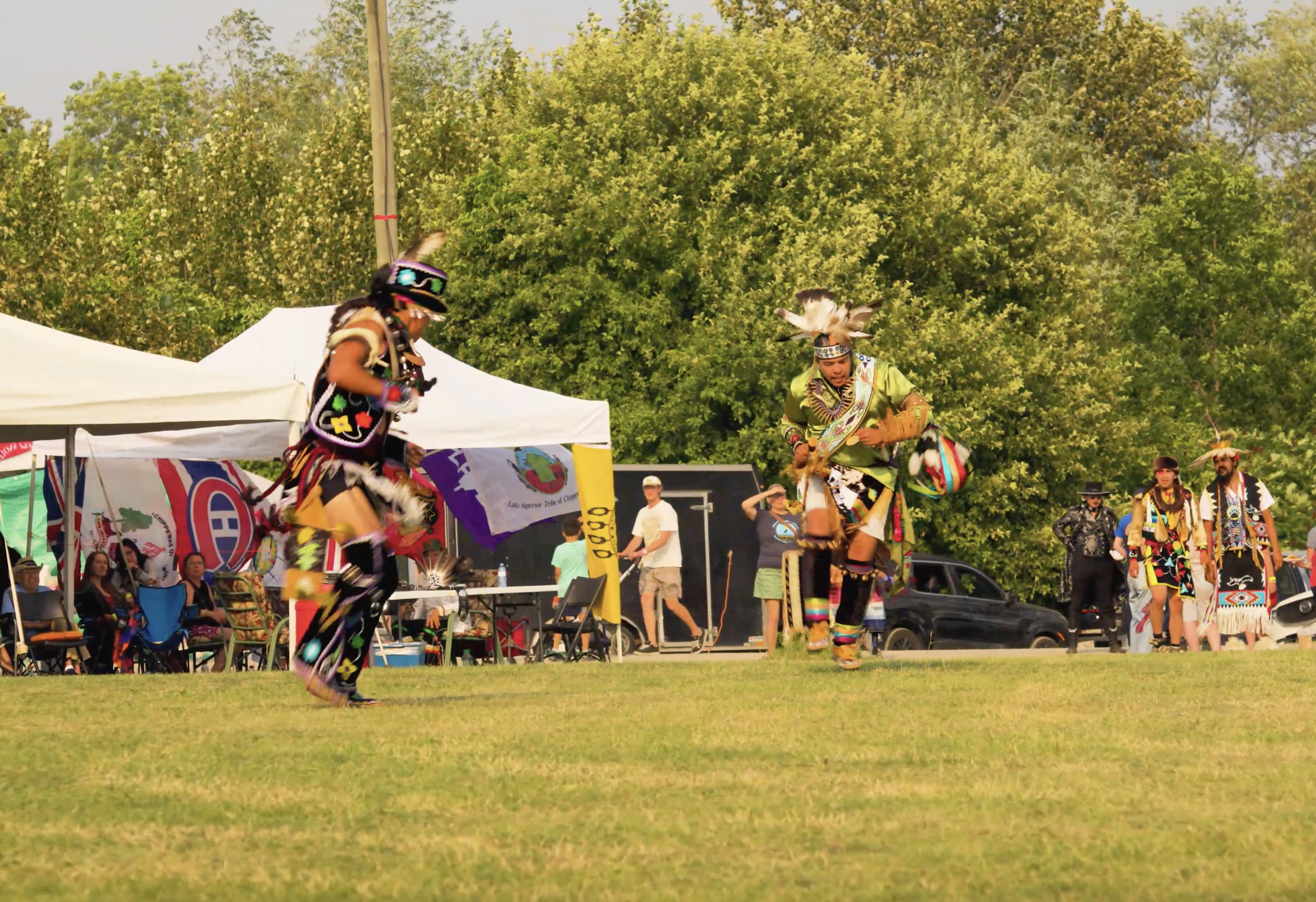
That story sits alongside others: welfare checks that kept a vulnerable community member in view until paramedics could return; break-ins traced through drone footage where fixed cameras had blind spots; hikers and visitors who lose their way in the surrounding wilderness. Director Dustin Pelkey, from the satellite community of Rabbit Island, points to the community's annual cultural festival — one of the largest powwows in North America — when the population triples and drones help survey the grounds and keep visitors safe. Thermal cameras, speaker attachments, spotlights: each has been used to support emergency services and deter crime.
Sovereignty in the sky
For Wiikwemkoong, none of this is separable from a larger truth: this is their land, and these are their laws.
"We are on the territory. We are not governed by the federal or provincial government. We have our own laws," Chief Tim explains. When questions arose about whether a First Nation could operate such systems — typically the domain of police or military — the answer was grounded in jurisdiction. "We are using our jurisdictional rights to ensure our mandate is to protect our nation."
That self-governance enabled something notable: two of the community's own departments, its police service and its administration, came together under a memorandum of understanding to work as one. The Chief describes it in the language of the water. Steering the boat means little unless everyone paddles together; one paddle alone just turns you in circles.
The skepticism that met the drones early on has reversed entirely. Community member Patricia Manitoba remembers the first curious, uneasy days — people wondering if they were being spied on. Then understanding set in. "It was actually really comforting," she says, "to know that there was somebody keeping an eye on us, keeping us safe." Now, driving home alone at night and seeing a drone overhead gives her confidence. Residents who once objected have started asking for more flights.
What comes next
Word has spread. Other police services now visit Wiikwemkoong to see how its department operates, and other First Nations are asking the same question: how did you do this? The community's answer is generous — they share what they've learned, and offer to help neighbouring communities build programs of their own.
For a First Nation that never ceded its land, the drone program has become something larger than a security system. It's an expression of self-determination: a community choosing to coexist with, and evolve alongside, modern technology — on its own land, by its own hands, under its own laws.
"As First Nations, we need to coexist with modern society, and we need to evolve with modern society," says Trudeau. "That includes the technical aspect and what's available to us to enhance our services."
The Chief frames the stakes in terms of time. Using drone technology in today's environment, he says, Wiikwemkoong is ensuring it can protect its community members "not only for today, not only for tomorrow, but for years to come."
Or, as McCormick puts it — his love letter to the community, written in technology: "I love our community, I love our culture, and I'm proud of our people. And I'm happy that we have this technology to keep them safe."
Watch the full story here:

-2.png?width=300&name=Insight%20blog%20featured%20image%201140X660%20(4)-2.png)
-2.png?width=300&name=Insight%20blog%20featured%20image%201140X660%20(3)-2.png)
.png?width=300&name=HS%20-%20Featured%20Images%20(7).png)
