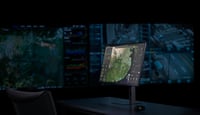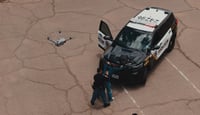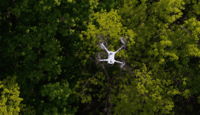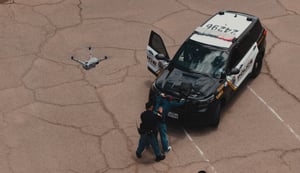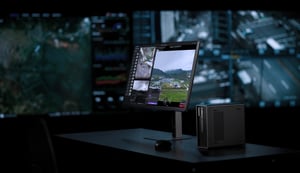

Every alarm forces the same question: is this real, and how many people should we send? For years, dispatchers and security operators answered it with whatever they had on hand, a patrol car or an officer or a guard on the ground, and only learned what they were actually dealing with once someone arrived. Drone as First Responder (DFR) changes the order. The drone goes first and streams the scene back to the command center, so the decision about who to send comes after someone has actually seen what is happening. And increasingly that drone no longer rides out with a pilot. It already lives at the scene in a dock and launches on its own when an alert comes in. That shift, from drone as first responder to dock as first responder, is what this article is really about.
The model itself is not new; what is new is where the drone starts from. Below, we walk through what DFR is, why it is becoming practical now, and how the dock is changing the way programs scale.
If you are researching DFR for the first time, whether for a police department, a city, or a private security operation, this is the overview to start with.
What Is Drone as First Responder (DFR)?
Drone as First Responder is a response model built around a simple sequence: an alarm or call comes in, a drone is sent to the location first, the command center sees live aerial video before any ground unit arrives, and the response is then sized to what the drone actually shows. Instead of committing an officer or a guard to every alert and finding out on arrival, the team qualifies the incident from the air first.
The point is not to replace ground response. It is to inform it. DFR works as a decision-support layer: it helps the dispatch center confirm what an incident actually is before spending expensive, limited ground resources on it. A drone response usually costs far less than sending a full patrol vehicle and officer, and it puts eyes on the scene sooner. Cheaper confirmation plus faster awareness is the core of why the model exists.
Why DFR Is Gaining Ground Now
DFR has been technically possible for a while. What has changed is that the conditions for deploying it at scale have matured at roughly the same time. Three of those conditions matter most.
Regulatory pathways are opening up. More markets now have defined procedures for flight approval, operating areas, pilot qualification, risk assessment, and emergency response. That does not make approval automatic — requirements vary by country and region, and we will come back to that — but it means DFR programs can increasingly be delivered through repeatable compliance paths rather than one-off exceptions.
The hardware and software are more dependable. Docks, aircraft, geofencing, mission logs, remote oversight, lost-link handling, and return procedures have all matured. That reliability is what lets an operator document safety controls in the materials a customer's IT team or a regulator will actually review.
The systems can finally talk to each other. A DFR program is only useful if the drone's video, location, and status flow into the tools a command center already runs. Modern fleet management can connect to computer-aided dispatch (CAD), video management systems (VMS), geographic information systems (GIS), and evidence archives — so the drone becomes part of the existing workflow instead of a separate screen someone has to remember to check.
There is a fourth, quieter condition: proven projects. Public safety, city management, private security, and critical-infrastructure programs have moved beyond demonstrations. That makes the next customer's decision easier and the procurement risk lower.
From Patrol-Based Deployment to Dock as First Responder
Early DFR programs used patrol-based deployment. A trained pilot received a call, carried or prepared a drone, launched it near the operating area, flew to the scene, and streamed the view back to the command team. This proved the value of aerial response. But it scales poorly: every new coverage area adds more pilot scheduling, more standby coverage, more equipment readiness, and more launch preparation.
Dock as First Responder removes that bottleneck for the routine cases. The drone lives in a pre-positioned dock. When a trigger comes in, the dock opens, the drone launches automatically, flies the mission, and returns to charge on its own. A pilot still supervises the whole time — remotely, and able to take over at any moment — but one person can now oversee more than one site instead of driving a drone to each call.
It is worth being precise about what this does and does not replace. Dock DFR adds a scalable response layer for routine, repeatable, and time-critical coverage. It does not retire patrol-based flying. SWAT overwatch, indoor operations, fast-changing dynamic scenes, and any situation where a trained pilot is already on site still call for a pilot with a drone in hand. The dock model is an added layer, not a substitute — the two run alongside each other.
Here is the same response scenario under each model:
| Cost dimension | Patrol-based deployment | Dock automation | Quantified impact |
|---|---|---|---|
| Single-dispatch travel | A pilot drives to the scene with the aircraft, typically adding 10–30 minutes | A nearby dock launches and arrives in about 3–5 minutes (when a dock is pre-positioned within the coverage area) | Response travel time reduced by 70–80% |
| Pilot labor | Each response requires one pilot engaged throughout the mission | One pilot can supervise up to four active dock operations in mature procedures | Pilot productivity can increase by up to 4x |
| Field safety exposure | The pilot enters an uncertain operating environment | The pilot supervises remotely and does not need to enter the scene | Worker exposure and third-party liability risk are reduced |
| Multi-shift night coverage | 24/7 coverage requires multiple pilot shifts | Automated tasks plus one remote duty pilot can cover more sites | Night standby labor can be reduced by 60–70% |
| Equipment loss and crash exposure | Manual stick input creates more pilot-error exposure | Standard routes and boundary rules shift routine execution to the system | Internal data indicates Dock DFR crash rates are significantly lower than manual flight |
| Training and qualification | Every pilot must maintain active control proficiency | Training shifts toward remote supervision and exception handling | Training cost decreases and pilot value increases |
Source: DJI Dock as First Responder whitepaper, §1.2. Response-time figures assume a dock pre-positioned within the coverage area.
Beyond cost, the dock model shifts the pilot's job. The industry is moving away from stick-level flight control and toward supervision of automated aviation tasks. A mature DFR team uses its pilots for judgment, mission supervision, airspace awareness, exception handling, and operational accountability — not for flying every routine sortie by hand.
Safety is a real part of this shift, not a marketing line. DJI internal crash reviews indicate that more than 90% of drone crash incidents are linked to pilot error. Standardized mission execution — planned routes, task boundaries, geofencing, return-to-home logic, and remote supervision — reduces that exposure.
Where DFR Is Used: Eight Common Scenarios
Public safety and private security operate under different mandates, but the first operational question is often the same: does this alarm deserve more ground resources? These eight scenarios — four public safety, four private security — show how a drone-first look answers that question.
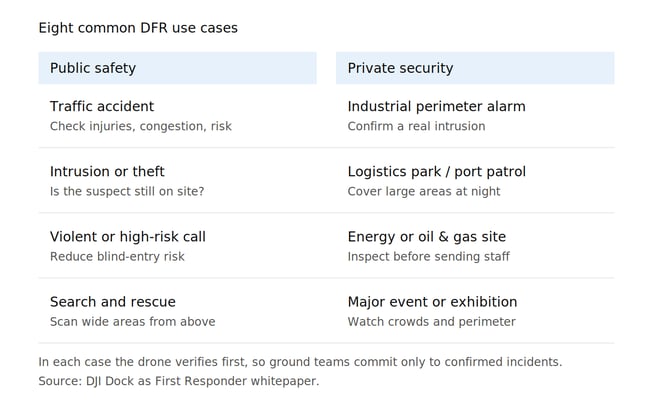
Eight drone as first responder use cases across public safety and private security
Public safety
- Traffic accident. The drone checks vehicle positions, congestion, injuries, and secondary risk, so the team can decide whether to escalate police, fire, or medical response.
- Intrusion or theft. The drone confirms whether a suspect is still on site, which tells units whether to route in or adjust containment points.
- Violent or high-risk call. The drone identifies people, vehicles, approach routes, and danger zones, reducing blind-entry risk for officers.
- Search and rescue. The drone expands the search area quickly from above and guides ground teams to the right zone.
Private security
- Industrial perimeter alarm. The drone flies to the trigger point and confirms whether it sees people, vehicles, or an actual intrusion — so a guard is dispatched, police are called, or the alarm is downgraded.
- Logistics park or port patrol. The drone covers large areas at night, reducing unnecessary movement of staff.
- Energy or oil-and-gas site. The drone inspects high-risk areas before anyone is sent in, so the team can decide whether human entry is actually required.
- Major event or exhibition. The drone checks crowd movement and perimeter conditions in real time, letting security leads reallocate staff as things change.
Across all eight, the same three capabilities are doing the work: fast verification fills the information gap left by an unclear alarm; live situational awareness brings video, location, and status into the command workflow; and resource qualification means ground response starts with better information and clearer priority.
Who Is Already Running DFR Programs
DFR has moved past the demo stage in several regions. Two programs illustrate the range — one public, one private.
El Paso, United States (public safety). El Paso runs a citywide program emphasizing compliance, auditability, and data control. Using DJI Dock 3 with FlightHub 2 On-Premises, the department keeps data under local control and meets law-enforcement audit requirements, while the command center dispatches drones directly. The result is a shift from waiting for a patrol vehicle to getting aerial confirmation within minutes — and, because the waivers and infrastructure were built for the whole city rather than a single department, the program has been able to expand across agencies, from a handful of docks to a much larger fleet.
Mondiapol, Italy (private security). Mondiapol is an Italian security group serving residential, commercial, and critical-infrastructure customers. It integrates DJI Dock 3 and FlightHub 2 into its existing security service workflow, so an alarm can trigger the drone, and the drone's data flows into its incident-management process — connected through the FlightHub 2 OpenAPI and an Auto Dispatch Workflow rather than a manual launch. That turns DFR into part of a repeatable service package rather than a one-off equipment purchase — the drone confirms the reality of an alarm and sends a guard only when one is actually needed, instead of rolling a patrol on every trigger.
The shared signal is that dock-based DFR is now an operational reality in both public and private settings, not a proof of concept.
Frequently Asked Questions
What is Dock as First Responder? Dock as First Responder is the docked evolution of the DFR model. Instead of a pilot carrying a drone to a call, the drone lives in a pre-positioned dock and launches automatically when an alert is triggered — flying the mission, streaming live video to the command center, and returning to charge on its own, all under a pilot's remote supervision. It adds a scalable, always-ready layer for routine and time-critical coverage, alongside (not instead of) traditional pilot-flown operations. For a full walkthrough of how a single response unfolds, see our article on the DFR response workflow.
Is DFR legal? DFR programs operate within each region's aviation and public-safety rules, and requirements vary by country and region — covering flight approval, operating areas, pilot qualification, risk assessment, and data handling. The practical work is similar across markets: define the flight area, write the operating procedure, assign responsible personnel, prepare emergency actions, and document how data is processed. Because the specifics differ so widely, a DFR program is built around meeting the requirements that apply where it operates rather than assuming any particular outcome.
How many people does it take to run a DFR program? Fewer than a patrol-based model, once procedures mature. Because routine missions are automated and supervised remotely, one pilot can oversee up to four active dock operations where local regulations permit, and night standby labor can be reduced by 60–70% (per the DFR whitepaper). A person is always in the loop — remotely supervising and able to take over — but that person is no longer flying every routine sortie by hand.
How does DFR compare with traditional patrol on cost? The biggest differences are in travel time, staffing, and night coverage. A pre-positioned dock reaches a nearby scene in about 3–5 minutes versus the 10–30 extra minutes of a pilot driving out with the aircraft — cutting travel time by 70–80% — and one pilot supervising several docks changes the staffing math. Our DFR ROI article breaks the six cost dimensions down in detail.
How is privacy protected? Mature programs treat privacy governance as an operational discipline: no-fly zones over sensitive areas, mission boundaries that keep flights on incident-relevant airspace, defined data-retention periods, and transparency with the community about flight policy. Deployment can also keep data under the operator's own control. Our article on data security, privacy, and community trust covers how this works in practice.
The Takeaway
Drone as First Responder reorders the response chain: confirm from the air, then commit the right ground resources. The dock is what makes that model scalable — turning aerial confirmation into an always-ready resource that launches on alert, under remote human supervision, while pilots focus on judgment rather than routine flying. It is an added layer for the routine, repeatable, time-critical work, not a replacement for the pilot-flown operations that still call for a person on site.
If you are building the case for a program internally, the DJI Dock as First Responder solution shows how DJI Dock 3 and FlightHub 2 fit together, and the Dock as First Responder whitepaper goes deeper on the cost model, the five project stages, and the security and compliance framework behind a production deployment.
Download the Dock as First Responder whitepaper →
Next in this series: From 911 Call to Eyes on Scene: Inside a DFR Response — a minute-by-minute look at how a single DFR response actually plays out.